
Key Takeaways
- The best electricity plan for an EV matches the driver's charging schedule, vehicle efficiency, monthly mileage, and ability to automate off-peak charging.
- A typical Texas EV owner driving 1,000 miles per month may add $50 to $150 in monthly home charging costs.
- For an EV using 286 kWh per month, charging costs about $37 on a 13 cent flat rate and about $23 on an 8 cent overnight time-of-use rate.
- Time-of-use and EV-specific plans can reduce costs substantially, but charging outside discounted windows can cost more than a flat-rate plan.
- Emporia's EV Charging Savings Plan offers 11 daily hours of $0 per kWh supply pricing for $14.95 per month and requires an Emporia EV charger.
The best electricity plan for your electric car is not necessarily the one with the lowest advertised rate. It is the one with the rate structure that fits how and when you charge.
Your EV is the largest flexible load in your home. It draws five to ten times what your refrigerator draws when it’s running, and you have complete control over when it charges. An electricity plan that ignores that flexibility charges you peak-hour rates for power you could have taken off-peak for nothing. This guide helps you match your charging profile to the right plan structure.
Why Your Electricity Plan Matters More for EVs
Most households use electricity in ways they can’t shift: lights, HVAC, appliances. That usage profile is largely fixed by when people are home and awake. Electricity plans designed for those households treat every kilowatt-hour the same because the customer can’t really shift when they use power.
EV charging is different. Your car sits in the garage for eight to twelve hours at a time, and it doesn’t care which of those hours it charges. That flexibility is worth real money.
The grid is cheapest to operate when demand is low, typically late at night and midday. Utilities and retail electricity providers can offer dramatically lower rates during those windows because they have excess generation capacity. A time-of-use or free-window plan passes those savings to you in exchange for shifting your charging load to those times.
For a typical Texas EV owner driving around 1,000 miles per month, home charging adds $50 to $150 per month to the electricity bill depending on vehicle efficiency and the current rate. The right plan can significantly reduce that number.
Three Plan Types for EV Owners
| Plan Type | Structure | Best For | Risk |
|---|---|---|---|
| Flat rate | Same price per kWh at all times | Simplicity; no scheduling discipline required | You pay peak prices for every charging session |
| Time-of-use (TOU) | Lower rates overnight and midday; higher rates in the afternoon | Owners who charge overnight or can shift usage off-peak | On-peak charges can exceed flat rates if you charge at the wrong time |
| EV-specific plan | Free or near-free charging windows; flat monthly fee | EV owners with integrated smart charging hardware; predictable overnight + midday charging | Higher off-peak rates; monthly fee adds cost for light chargers |
Flat-Rate Plans
A flat-rate plan treats every kilowatt-hour the same. For most appliances, that’s fine. For EV charging, it leaves money on the table.
If you charge unpredictably, travel frequently, or simply don’t want to think about rate windows, a flat-rate plan removes all of that complexity. You’re not losing money by charging at 6 PM the way you would on a TOU plan. You’re just not capturing the savings you could.
Time-of-Use Plans
A TOU plan charges more during on-peak periods (typically weekday afternoons, often 3-9 PM in Texas) and less during off-peak hours. If you set your charger to run overnight, you capture significant savings. If you charge during peak hours, you pay above the flat-rate equivalent.
The variable that determines whether a TOU plan works for you is scheduling discipline. A smart charger with automated scheduling handles this reliably. Manual scheduling (setting your car’s departure time via app each night) works but adds friction.
EV-Specific Plans
EV-specific plans go further than standard TOU structures. Instead of discounted off-peak rates, they offer free charging windows, typically two per day, and charge a flat monthly fee in exchange.
The math works differently than a standard TOU plan. Instead of saving 30-50% on off-peak charging, you pay $0/kWh during the free windows. Your charging cost during those hours drops to zero (energy supply charge only; TDU delivery charges set by your local utility still apply).
The requirement for most EV-specific plans is that the charger coordinates with the rate windows natively. The plan is built for the charger, and the charger is built for the plan.
Running the Numbers
How much you save on an EV-specific or TOU plan depends on three things: your vehicle’s efficiency (miles per kWh), how much you drive monthly, and what you’d otherwise pay on a flat rate.
A rough comparison for a Texas EV owner driving 1,000 miles/month with a 3.5 mi/kWh vehicle:
| Plan | Monthly kWh for charging | Effective rate | Monthly charging cost |
|---|---|---|---|
| Flat rate (13¢/kWh) | 286 kWh | 13¢ | ~$37 |
| TOU overnight (8¢/kWh off-peak) | 286 kWh | ~8¢ | ~$23 |
| Emporia EV Charging Savings Plan | 286 kWh | $0 supply + TDU | ~$15 + $14.95 fee |
These are illustrative estimates. Your actual numbers depend on your current rate, TDU charges, and how consistently you charge during free windows.
Pulling live Electricity Facts Label rates for your address…
* During free charging windows, EV charging kWh are billed at $0 for energy and per-kWh TDU/delivery. Your TDU's monthly delivery fee still applies.
What Makes an EV-Specific Plan Different
A TOU plan requires you to manage two separate systems: the rate structure from your REP and the scheduling logic in your charger or car app. If your charger doesn’t integrate with your rate plan directly, you’re responsible for keeping them in sync.
With an integrated EV-specific plan, the charger and rate structure are a single product. You’re not running two separate systems that have to stay in sync.
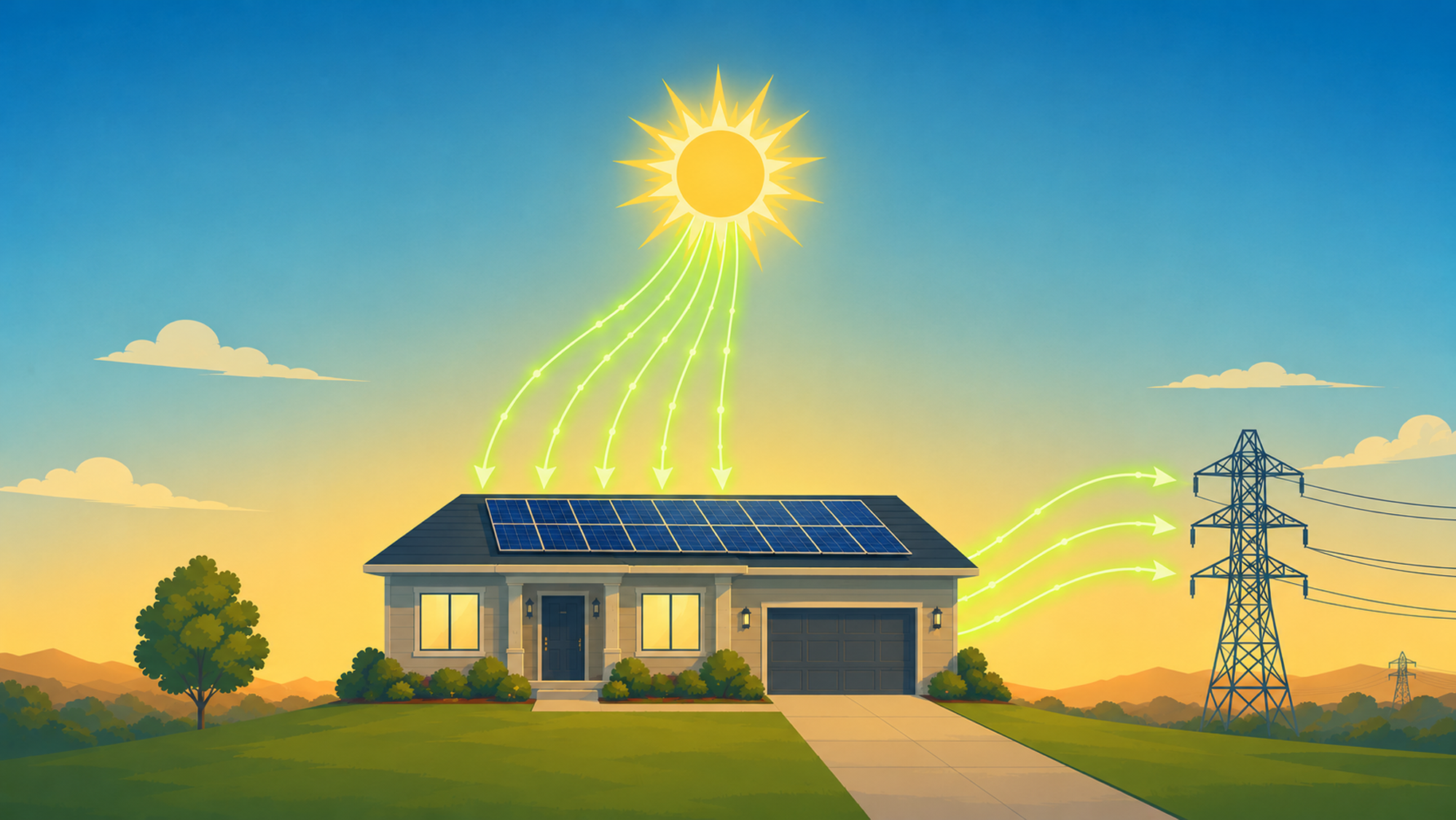
For solar homeowners, the midday free window (12 p.m. to 4 p.m.) compounds with panel production. Your EV charges from the grid at $0/kWh during the same hours your panels are generating the most, which means your solar output goes toward export credits rather than being consumed by your car. You capture both benefits at the same time. How solar and EV charging work together covers the full picture.
A Decision Framework
Start with your charging behavior. If you consistently charge overnight and could move to an automated schedule, any free nights or TOU plan will likely save you money over a flat-rate plan.
Then consider your hardware. If you have a smart charger that integrates with your rate plan, use that integration. Automated scheduling removes the single biggest risk of a time-of-use plan: missing the window.
Then run the math. Use the EV charging savings calculator above to estimate annual savings based on your actual driving habits and current rate.
If you drive unpredictably or charge at irregular times, a flat-rate plan might be the right call. Simplicity has real value. A TOU plan that saves money in theory but requires discipline you won’t maintain will cost you more in practice.
Emporia’s Plans for EV Owners
Emporia offers two plans relevant to EV owners in Texas deregulated areas. Both are offered in partnership with Light, a licensed retail electricity provider.
EV Charging Savings Plan: Two daily free charging windows totaling 11 hours of $0/kWh supply pricing. A flat $14.95/month plan fee. Requires an Emporia EV charger. The charger and plan are a single product: the rate windows are built into the charger’s scheduling logic, managed through the Emporia app. Available to Emporia EV charger customers in Texas deregulated areas with 12- or 36-month terms where offered for your address.
Solar + EV Charging Savings Plan: Adds a solar buyback credit to the EV plan for homes with both connected solar and an Emporia EV charger. You can review the full plan terms and current rate before enrolling.
Emporia’s Fixed Plan is also available to Texas homeowners who want a competitive fixed rate without hardware requirements. No usage thresholds, no expiring credits, 100% renewable matched with renewable energy certificates.
All Emporia plans are available in Texas deregulated service areas only. Customers in Austin (Austin Energy) or San Antonio (CPS Energy) cannot choose a retail electricity provider.
You can compare all current Emporia plans and check eligibility at your address before signing up.
Frequently Asked Questions
See the EV Charging Savings Plan.
Get 11 hours of free EV charging every day with automatic scheduling.